Best Rice Cookers Australia: Zojirushi vs Tiger

Rice is one of the most common staples in Australian kitchens, but getting consistently good texture on the stovetop isn't always easy, especially with brown rice or larger batches. A good rice cooker takes the guesswork out of it entirely, handling temperature and timing automatically so you get soft, evenly cooked rice every time. After comparing the leading models available in Australia, two brands consistently stand out for their engineering and reliability: Zojirushi and Tiger. Both are long-established Japanese brands, and each takes a slightly different approach to solving the same problem. Here's how they compare, and which one is likely to suit your kitchen.
Zojirushi: Best for Precision and Consistency
Zojirushi is one of the most trusted names in rice cookers worldwide, and its reputation comes down to how it handles heat. Rather than heating only from the base, Zojirushi's induction models generate heat directly from the inner pot itself, which spreads temperature more evenly across the rice as it cooks. This matters most with rice types that are harder to get right, like brown rice, which typically needs longer, more even heat than white rice to cook through properly without turning mushy on the outside or staying hard in the centre. Fuzzy logic technology in Zojirushi's cookers adjusts the cooking time and temperature automatically based on the type and quantity of rice, so you don't need to guess at settings.

Pros
- Advanced induction heating for even temperature distribution
- Fuzzy logic technology automatically adjusts cook time and temperature
- Multiple settings for white rice, brown rice, porridge, and more
- Keep-warm function holds rice at serving temperature for hours
- Available in multiple sizes, from compact 5.5-cup to family-sized 10-cup models
Cons
- Higher price point than most conventional rice cookers
Why choose Zojirushi? If texture consistency across different rice types is your top priority, particularly if you cook brown rice or mixed grains regularly, Zojirushi's induction heating and fuzzy logic system are built specifically to solve that problem. The Zojirushi Micom Rice Cooker NL-GAQ10 (5.5 Cups) suits smaller households, while the Zojirushi Micom Rice Cooker NL-GAQ18 (10 Cups) is a better fit for larger families or anyone who cooks in bigger batches. Browse the full Zojirushi range to compare sizes and models.
Tiger: Best Value Without Compromising on Quality
Tiger takes a slightly different path to the same goal: reliable, well-textured rice without unnecessary complexity. Its rice cookers use straightforward controls and multiple preset modes, so switching between jasmine, sushi, brown, or long grain rice doesn't require reading a manual each time. One genuinely useful feature is Tiger's tacook function, which lets you cook a side dish on a tray above the rice at the same time, using the same appliance and the same amount of standing-over-the-stove time. Like Zojirushi, Tiger's cookers include a keep-warm function and a clear display, and the inner pot is designed to distribute heat evenly across the base for consistent results batch after batch.

Pros
- Straightforward controls with multiple rice-type presets
- Tacook function cooks a side dish simultaneously with rice
- Keep-warm function and clear display included
- More accessible price point than premium induction models
- Pressure models available for households wanting extra texture consistency
Cons
- Standard (non-pressure) models don't match induction cookers for even heat distribution on brown rice
Why choose Tiger? Tiger is the better fit for households that want dependable, well-textured rice with genuinely useful extras, like cooking rice and a side dish together, without paying premium prices. The Tiger 4 In 1 Multi-Functional JAX-S Rice Cooker covers most household needs with its tacook function, while the Tiger IH Pressure Rice Cooker JPK-G10A (5.5 Cups) and larger Tiger IH Pressure Rice Cooker JPK-G18A (10 Cups) step up to induction heating with pressure cooking for households wanting the most consistent texture on brown rice and whole grains. Browse the full Tiger range to compare models.
Zojirushi vs Tiger at a Glance
| Zojirushi | Tiger | |
|---|---|---|
| Heating method | Induction (IH), fuzzy logic | Standard and IH pressure models |
| Standout feature | Automatic adjustment by rice type | Tacook simultaneous side-dish cooking |
| Best for | Brown rice, mixed grains, precision | Everyday value, extra convenience |
| Price range | Premium | Mid-range to premium |
| Sizes available | 5.5 cup, 10 cup | 4-in-1 (multi-size), 5.5 cup, 10 cup pressure |
Other Options Worth Considering
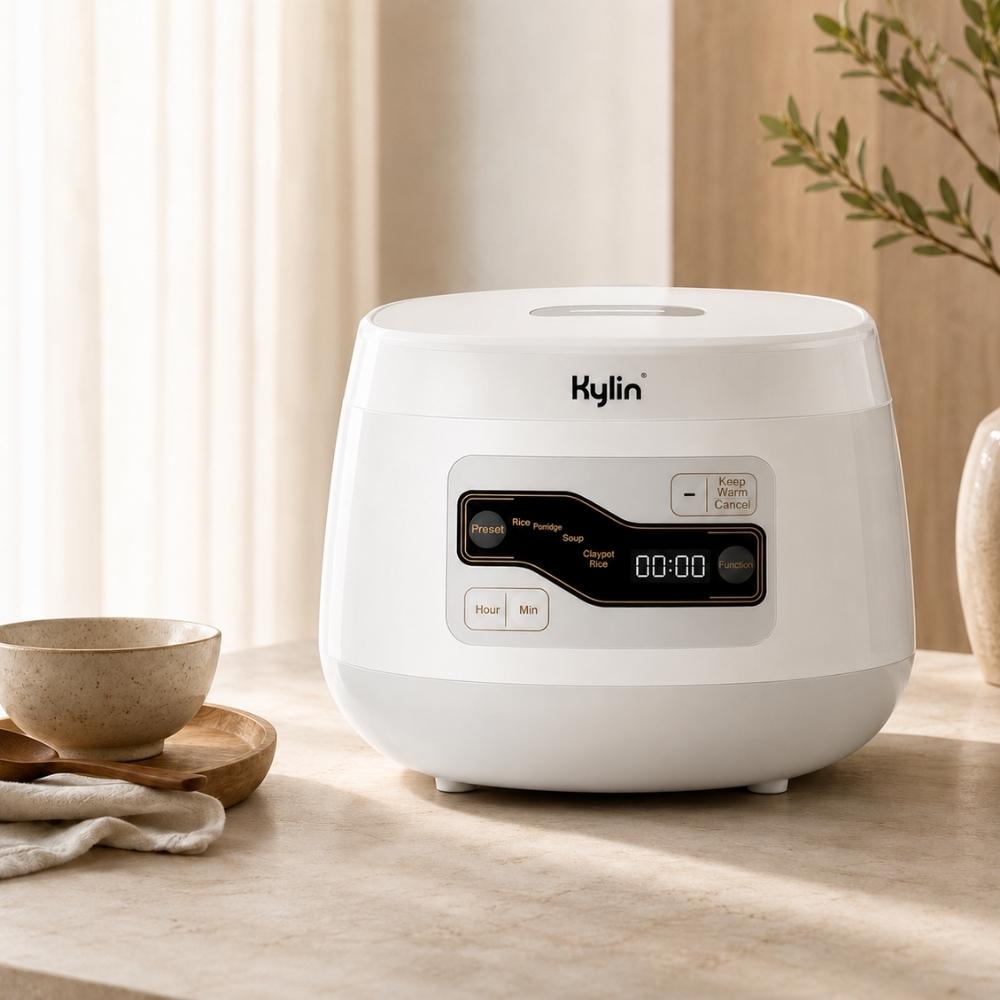
Zojirushi and Tiger aren't the only strong choices in the Australian market. If avoiding non-stick coatings altogether is a priority, Kylin's ceramic rice cookers, like the Kylin Electric No Coating Ceramic Rice Cooker 6 Cups 3L, use a natural ceramic surface instead of a chemical coating, and cost noticeably less than premium Japanese induction models while still holding heat evenly.

For households that prefer a traditional stainless steel inner pot with no coating of any kind, TATUNG has built a long-standing reputation on exactly that approach, and models like the TATUNG TAC-11RM 11-Cup Stainless Steel Rice Cooker use TATUNG's classic steam-based cooking method, known for consistent results across large batches.

Neither brand matches the precision of Zojirushi's fuzzy logic or the versatility of Tiger's tacook function, but both are worth considering if coating type or budget is your main deciding factor.
Tips for Choosing and Using Your Rice Cooker
Before buying, check the cup capacity against your household size. As a rough guide, a 5.5-cup cooker suits one to three people, while a 10-cup model is better for larger families or anyone who regularly cooks in bulk. If you're cooking sushi rice or other sticky short-grain varieties, use the dedicated preset if your cooker has one, since it adjusts water ratio and timing specifically for that texture. For brown rice or mixed grains, an induction or pressure model will generally give you more consistent results than a standard base-heat cooker, since these varieties are more sensitive to uneven heat.
Frequently Asked Questions
Is Zojirushi or Tiger better for brown rice?
Zojirushi's induction heating and fuzzy logic technology are specifically designed to handle harder-to-cook rice types like brown rice more evenly. Tiger's IH pressure models close much of that gap, but its standard (non-pressure) models are better suited to white rice.
What size rice cooker do I need for a family of four?
A 5.5-cup rice cooker (roughly 1 litre of uncooked rice capacity) is generally enough for a family of four, though households that eat rice with every meal or want leftovers may prefer a 10-cup model instead.
Is Tiger's tacook function actually useful, or just a gimmick?
It's a genuinely practical feature for weeknight cooking, since it lets you steam a side dish, like vegetables or fish, on a tray above the rice using the same appliance and cook cycle, rather than needing a separate steamer or pan.
Do I need a pressure rice cooker, or is a standard model enough?
If you mostly cook white rice, a standard model is usually enough. Pressure cooking makes the biggest difference with brown rice and whole grains, so it's worth the extra cost mainly if those make up a regular part of your diet.
How do Kylin and TATUNG compare to Zojirushi and Tiger?
Kylin's ceramic rice cookers are a good budget-friendly option if you want to avoid non-stick coatings entirely, while TATUNG's stainless steel cookers use a traditional steam-based method known for durability and consistent large-batch results. Neither offers the induction technology or fuzzy logic found in Zojirushi and Tiger's higher-end models, but both are solid choices depending on your priorities.
As featured in this article

Tiger 4 In 1 Multi-Functional JAX-S Rice Cooker - Made in Japan

Tiger IH Pressure Rice Cooker JPK-G10A 5.5 Cups

TIger IH Pressure Rice Cooker JPK-G18A 10 Cups

Zojirushi Micom Rice Cooker 10 Cups NL-GAQ18 Made in JAPAN

Zojirushi Micom Rice Cooker 5.5 Cups NL-GAQ10 Made in JAPAN
More Rice Cookers


Kylin Ceramic Rice Cooker 6 Cup 3L AU-K1030


SUPOR AU-S2300 3L IH Electric Stainless Steel Rice Cooker – Australian Version


TATUNG TAC-11RM 11-Cup Stainless Steel Rice Cooker


Kylin Ceramic Mini Rice Cooker 3 Cup 1.2L AU-K1012


Kylin Ceramic Rice Cooker 8 Cup 4L AU-K1040


Kylin Electric Mini Multi-Function Rice Cooker 2 cups AU-K6612 Beige


TATUNG TAC-06RM 6-Cup Stainless Steel Rice Cooker